
Junior Duke
Building confidence, resilience and independence — life skills beyond the classroom.

Junior Duke is a world-leading life-skills award for children aged 3 to 13, helping them build confidence, resilience and independence through practical, hands-on challenges rather than academic tests.
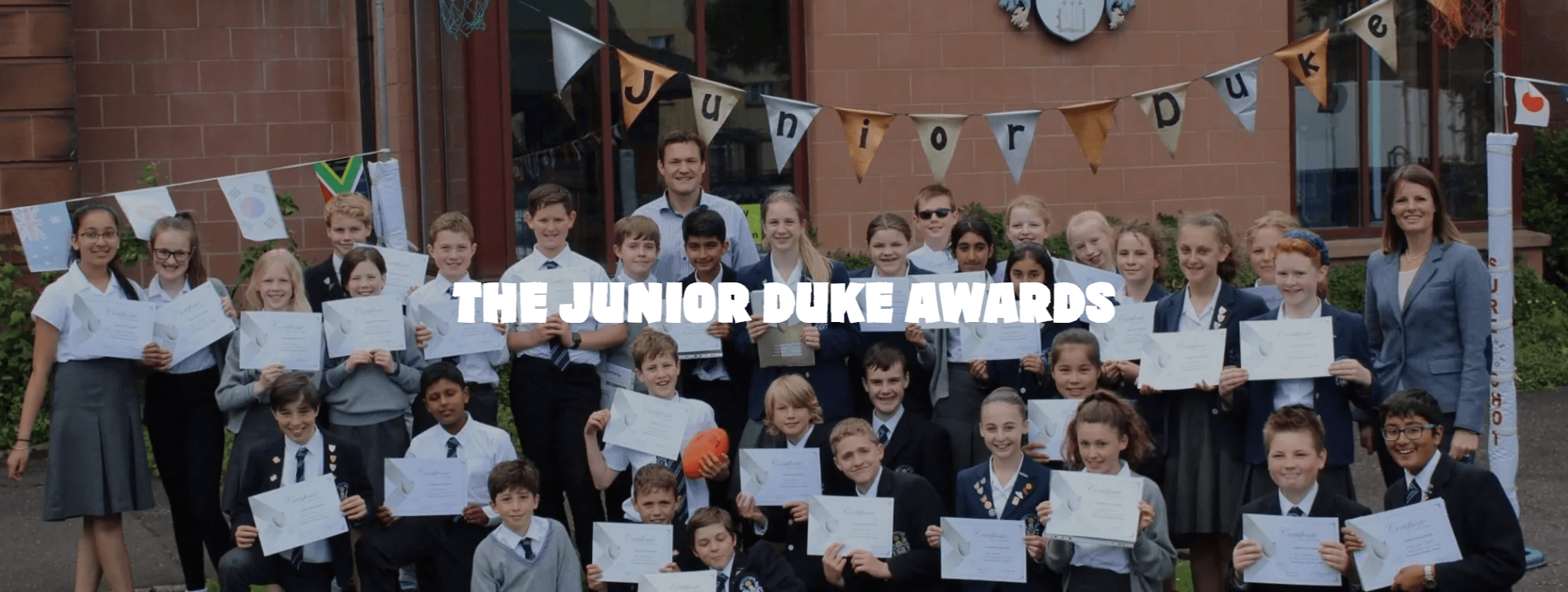
Life can be hectic and we are often too busy to allow our children to learn to do things for themselves as it's much quicker, as an adult, to do things ourselves. Many six year olds ARE capable of making toast for their breakfast, they CAN tie their shoelaces and they CAN make it up a hill whilst carrying their own essentials. After completing a level of the Junior Duke, many parents have said that they expect more from their children as they now know their youngsters are so capable!
All they need is the time and space to explore, learn from their mistakes and learn to be safe.
Levels

Nano Duke
Age 3–4

Micro Duke
Age 5
Silver Mini Duke
Age 6
Gold Mini Duke
Age 7

Bronze Junior Duke
Age 8

Silver Junior Duke
Age 9

Gold Junior Duke
Age 10

Platinum Junior Duke
Age 11

Silver Senior Duke
Age 12

Gold Senior Duke
Age 13
Award benefits
Bringing families together
Junior Duke reaches far beyond the classroom – the whole family can get involved with completing a variety of challenges.
Creating opportunities for parental links
Many schools make use of parents' skills to run this Award whilst others enjoy having the non-academic Award to enable new-found discussion about children's strengths and weaknesses.
Helping build a community feel
By completing their level and being celebrated in school, children feel a sense of being 'in it together'. Teachers' involvement in assessing creates bonds which may otherwise not happen.
Family fun!
Learning a skill for a challenge should be practised repeatedly. Thereafter, once parents understand how capable their children are, a new world of family adventures opens up!
Finding and developing independence
Giving children the space to learn new skills and do things on their own gives them a sense of pride and accomplishment in a non-academic setting.
Creating natural conversation
Many children love talking to teachers they don't know and sharing their achievements. Others are nervous to do so but soon realise being pushed to speak to unknown adults can be fun. Corridor conversations will become very interesting!
Discovering self sufficiency
Children naturally develop a 'can do' attitude when they are responsible for doing something for themselves and can see success.
Giving a feeling of belonging
Children will develop new friendships as they work through their level together – and may even compete to see who can complete challenges the fastest! Feeling pride that they earned points for their House or Class really boosts a feeling of belonging.
Increasing resilience
By having space to grow and make mistakes, children will be inspired to work through their setbacks to achieve success.
A welcome side-product
With the feeling of achievement and success through the non academic challenges, growth and improvement can often be seen in academics.
Did you know
- • Founded in 2006 by Dawn, a former primary teacher in Glasgow.
- • Around 140 hands-on challenges across all levels.
- • Empowering schools in almost 40 countries worldwide.